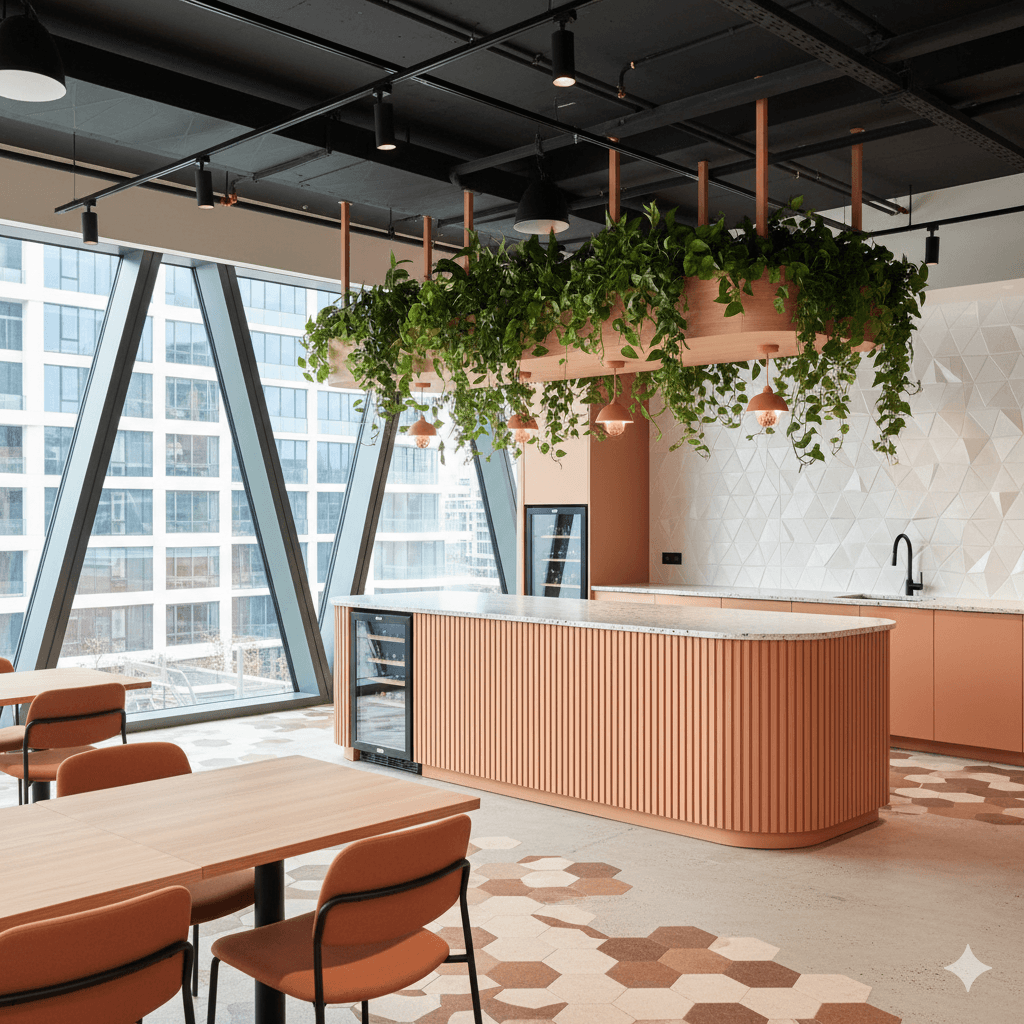
Modern commercial and mixed-use projects in the UK are embracing flexibility and adaptability. Buildings now feature open, multipurpose interiors with movable partitions and retractable walls, enabling one space to serve as an office by day and an event venue by night. Innovative designs also reuse existing structures: architects are converting old factories, warehouses or office blocks into vibrant mixed-use hubs, preserving heritage while reducing waste. For example, London's Battersea Power Station was transformed from a disused power plant into a lively complex with shops, offices and homes, illustrating how adaptive reuse creates vibrant community assets.
This mixed-use development features lush green terraces, street-level cafés and people-friendly public space, reflecting community-oriented, sustainable design. Such projects integrate green design and biophilia – extensive planting, green roofs and natural daylight – to improve health and appeal. By making mixed-use sites pedestrian-friendly, we reduce car reliance and pollution. Dense, walkable layouts (sometimes called "15-minute cities") with residential, retail, leisure and cultural facilities together foster local vibrancy and social cohesion. These designs also support national planning goals: mixed-use schemes are explicitly cited as key to "revitalising underused sites…promoting compact, low-carbon living".
Off-site modular construction is another game-changer. In the UK, modular building has gone mainstream – the government now expects 25–30% of new homes to be built with Modern Methods of Construction by 2025. Developers in Leeds, Milton Keynes and new NHS hospitals have all used factory-built units to speed delivery. Modular techniques cut on-site waste (often by up to 50%) and improve energy efficiency by manufacturing in controlled conditions,. This shift also helped overcome labour shortages: units can be assembled on-site in days, slashing project times by around half.
Designers are linking modular and smart technologies to create flexible, future-proof structures. Current mixed-use projects blend modular building with digital tools and sensors – for example integrating Building Information Modelling (BIM) from the start. One firm notes that "new technologies like modular construction and smart systems are making mixed-use buildings more efficient, flexible, and people-centric.". In practice this means, say, offices where floor layouts can reconfigure as needs change, or apartments equipped with IoT systems that adapt lighting, heating or access controls. These innovations maximise the value of every square metre and help spaces evolve without costly rebuilds.
Sustainability underpins all these trends. The UK's push for net-zero means every element – from timber cladding and triple-glazed windows to solar panels and high-efficiency HVAC – is designed for low carbon and longevity. For developers, meeting these rising energy standards is now essential for planning approval and market appeal. Early collaboration with architects is vital: integrated design can achieve up to 75–80% carbon reductions in new homes. Innovative firms are already modelling schemes to the new Future Homes Standard, using advanced energy simulations. This helps avoid costly redesigns later and ensures buildings will meet tightening regulations.
Key Insights
- •Flexible Layouts: Movable partitions, mezzanines and shared common areas let commercial buildings serve many functions and adapt over time.
- •Modular Building: Off-site construction is now mainstream in the UK, delivering speed, quality and waste savings in large projects.
- •Sustainable Materials: Projects use green materials, high insulation and renewable systems. For instance, modern mixed-use schemes boast green roofs and energy-efficient façades as standard.
- •Community Focus: Incorporating plazas, green spaces and mixed functions creates lively urban hubs. Well-designed mixed-use places boost local economies and social connections.
Key Takeaways
The convergence of these practices means new UK commercial districts will be markedly different. Expect high-rise complexes with integrated parks and shops, flexible office floors that morph between work and leisure uses, and historic buildings reborn as community anchors. In short, architecture is becoming more dynamic, sustainable and people-centric. Expert architects who understand these trends can guide developers through the complexity – ensuring projects are both cutting-edge and compliant. By partnering early with architectural specialists, developers can unlock these opportunities and avoid pitfalls in delivering tomorrow's built environment.